
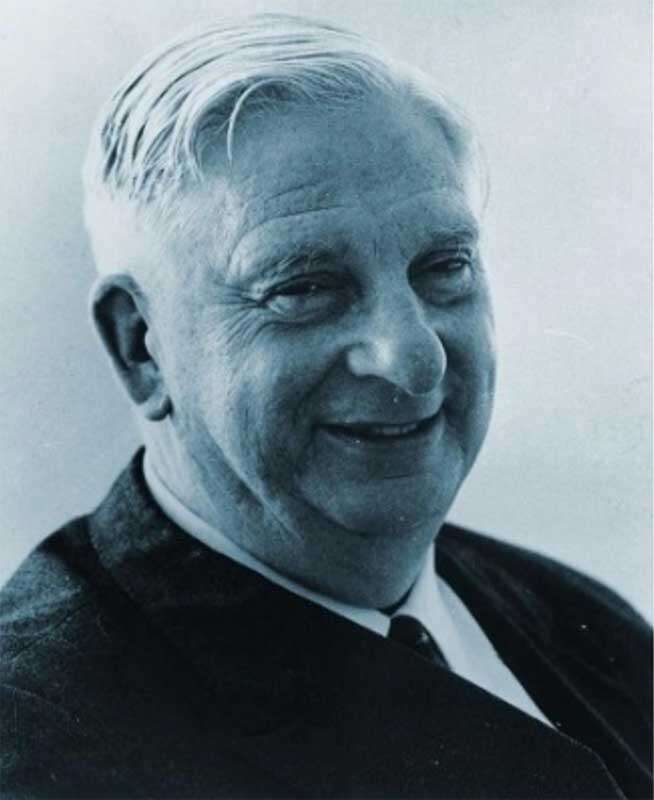
This month we remember a forgotten automotive hero who lived in our parish, Walter ‘Wally’ Hassan, private mechanic to the Bentley boys in the 1920s and designer of many of Britain’s most distinguished race engines, who lived at Oakley Cottage, New Road, Norton Lindsey.
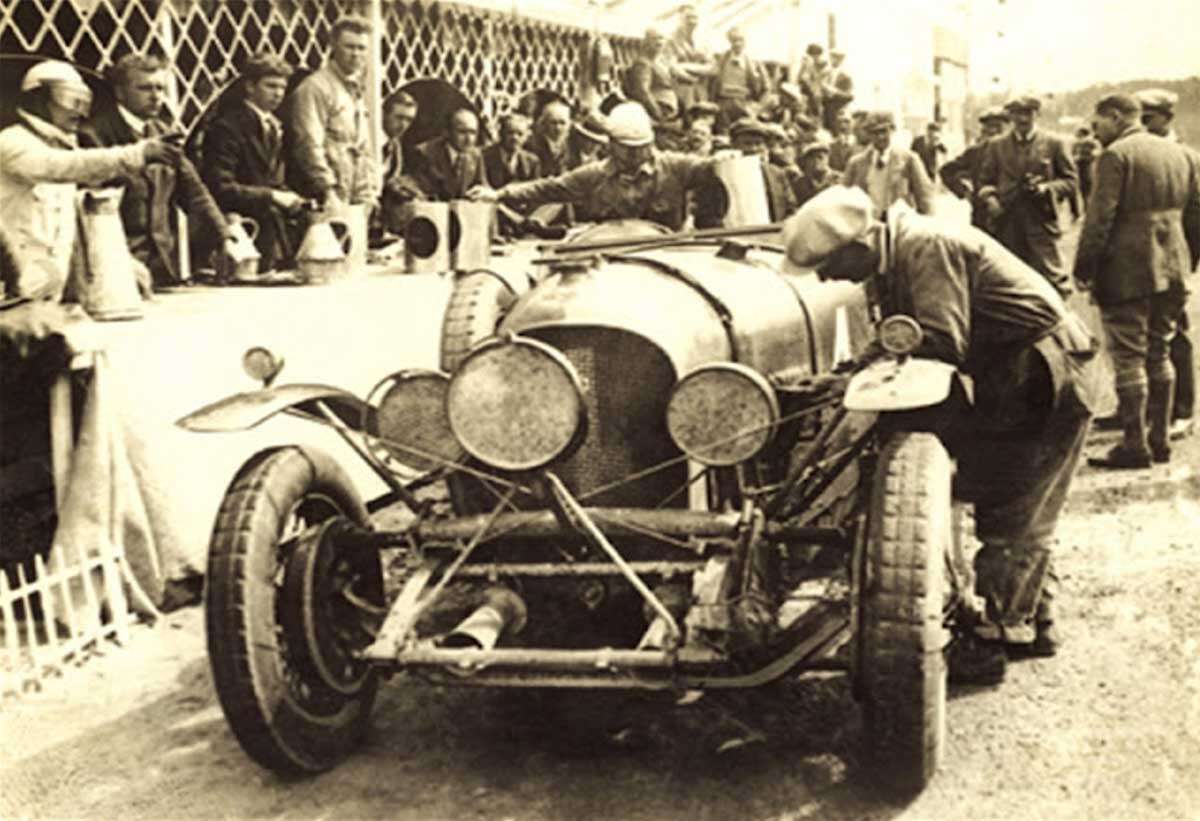
Born in 1906 in Hackney to parents of Irish descent, Walter Thomas Frederick Hassan, affectionately known as Wally, left school at 14 to join Bentley in Cricklewood in the first generation of apprentices (staff #14). Starting at the bottom of the ladder, he quickly rose to be a fitter, gaining experience with all aspects of Bentley’s models and went on to be involved in their racing activities. Tasked with preparing John Duff’s 3-litre for the banked circuit at Montlhéry in 1925, the car set a world record averaging 95mph over 24hrs and went on to set a further 20 world records for speed and distance. This established Wally as the best mechanic at Bentley, who attached him to their official racing team. Wally became one of the key players behind the famous ‘Bentley Boys’ who had great success at Le Mans and Brooklands throughout the 1920s. Wally remained the de facto head of Bentley’s race mechanics, preparing and supporting the cars Woolf Barnato took to his three Le Mans victories in 1928, ’29, and ’30. He also oversaw the construction and preparation of the Speed Six, which Barnato used to beat the Blue Train express across France, averaging 43mph over 570 miles, arriving in Calais 4 minutes ahead of the train. Pictured: Barnato’s Speed Six at Le Mans in 1929.
In 1931, Barnato withdrew from Bentley and decided to build and race his own cars. Wally quickly followed, and their partnership resulted in several fearsomely fast cars
In 1933 Wally married Ethel Murray, with whom he had a daughter and three sons. Wally retired from racing in 1936 but was now one of the most sought-after race engineers in the world and quickly found work. After a brief spell at ERA, then Thomson and Taylor, where he oversaw the construction of the Land Speed Record car, Wally tuned its two Napier Lion engines to 1,250 horsepower each to set a Land Speed Record in 1938 of 353mph and in 1947 cracked 400mph. It was during this time Wally was approached by another of our Parishes automotive heroes, Bill Heynes, at this time technical director of SS Cars, Bill was looking for a new chief engineer for the rapidly growing sports car maker. Wally agreed, but his initial stay was short-lived, as by the summer of 1939, with war looming, he was seconded to Bristol Aero Engines where his talents were put to use designing and tuning carburettors for the Hercules and Centaurus engines. As the war began to swing in the Allies’ favour, Wally returned to SS cars in Coventry where the men in charge, founder William Lyons, Bill Heynes and race engineer Claude Bailey, were convinced they needed to make their own engines. Although Heynes was in overall charge of engineering, it was Wally who handled much of the detail work. With no hope of building an engine during the war years, Heynes and Hassan had plenty of time to discuss, sketch and experiment; famously, much of the work was done through the night sat on the factory roof while taking turns keeping fire watch.
By the time their plans started to become a reality, SS cars had become Jaguar cars. The engine they designed was the XK6, with advanced features previously only seen on race engines; Jaguar was now offering a race-powered car to the general public. The engine was continuously developed and the XK series of sports cars claimed Le Mans victories in 1951, 1953, 1955 and 1957. With the conclusion of the XK development, Wally’s talents were superfluous at Jaguar and in 1950 he moved to Coventry Climax as chief engineer. Sadly, there isn’t space this month to cover all of Wally’s achievements, but I’d like to end with an anecdote from someone who remembers Wally: he was known to walk to the New Inn for a beer wearing his carpet slippers.