
Guy Rolfe has kindly offered to contribute to a local history section and expand it to cover myths and legends based on our three parishes and neighbouring towns of Warwick and Stratford-upon-Avon. In this first article, Guy introduces us to Norton Lindsey’s connection to the Ark of the Covenant.
According to the Bible, the Ark of the Covenant was a miraculous golden chest that contained two sacred stone tablets inscribed with the Ten Commandments. If it existed as it’s portrayed in the Bible, the Ark of the Covenant must be one of the most extraordinary artefacts in history. It could raise storms, radiate divine fire, level city walls, smash chariots, and destroy entire armies. Moreover, it could summon angels and even manifest the voice and presence of God. The Ark of the Covenant was kept in Solomon’s Temple in Jerusalem until it disappeared from history following the Babylonian invasion of the city in 597 BC. Biblical scholars, archaeologists and adventurers alike have spent years searching for the last resting place of the Ark, but its secret hiding place has remained one of history’s most enduring mysteries.
In the C12th the Knights Templar’s, holy warriors fighting for Christianity, plundered the Holy Land and brought back many holy artefacts. Ralph de Sudeley, leader of the Templars, was a wealthy English knight, born at Sudeley Castle Winchcoombe, returned home from the Holy Land in 1189 with a vast collection of treasures he found at Jebel Madhbah. Upon his arrival home, de Sudeley immediately bought a large estate and founded a Templar preceptory to train new recruits for a fresh Crusade being planned by King Richard I. Today we know this place as Temple Herdewyke 14 miles south of our three parishes. The local Feet of Fines, contemporary records of land and property holdings, show de Sudeley’s preceptory possessed expensive holy relics brought back from the Middle East. An entry for the year 1192 included mention of certain objets sacrés- sacred artefacts- housed in the chapel of the Herdewyke preceptory. As official documents in the C12th were frequently written in French, the term objets sacrés was the usual way of describing holy relics returned from the Crusades, often precious objects thought to have been associated with the Bible. Unfortunately, no specific details are given, other than many pilgrims visited and donated large sums of money to see these items. Nevertheless, chances are these could well have been the same items de Sudeley discovered in the cave at Jebel Madhbah. The question is – what happened to them?
By the early 1300s there were hundreds of exceptionally wealthy Templar preceptories throughout Europe. Although their riches were originally plundered from the Crusades, the Templars had amassed further wealth by leasing land and acting as some of the first bankers in Christian Europe. In the early 14th century, fearing their power and influence, the Pope ordered the Templar order to be dissolved. In England, though, King Edward II had fallen out with the Pope and allowed the order to continue, particularly as he enjoyed their financial support. However, in 1322, when the Templars refused to continue financing the King, he ordered the Templars to be arrested and their property seized. Upon Ralph de Sudeley’s death, the Herdewyke preceptory had been bequeathed to the Templar order, who were still in residence at the time of Edward’s purge. Accordingly, their possessions were seized by the crown – or, at least, if local legend is to be believed, only some of them were. According to the Warwickshire historian William Dugdale, who wrote in 1656, the explorer Sir Walter Raleigh visited Herdewyke in 1600 and was told a story about the Templars hiding treasure in the area. Raleigh took it seriously and spent months looking for the treasure. He persuaded his wealthy wife Elizabeth Throckmorton to buy the Herdewyke estate and had a gang of men excavate the ruins of the Templar preceptory. Apparently, nothing was found. Nevertheless, could this legendary treasure have been the same relics that once resided in the Herdewyke chapel in Ralph de Sudeley’s time? It is believed it is because of Raleigh’s extensive excavations that the MOD chose this site for their munitions storage – but that’s a story for another day.
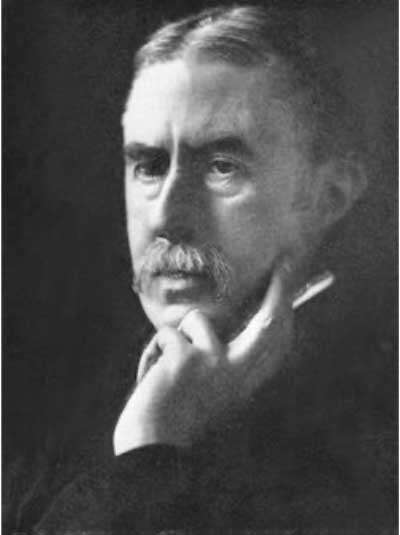
Fast forward to the C19th, a local antiquarian named Jacob Cove-Jones (right) from the village of Loxley claimed the Templars had left clues in the nearby church at Burton Dassett that revealed the whereabouts of the legendary treasure. During repairs to the church in 1890, the plaster was removed from the internal walls to reveal ancient decoration hidden for centuries to either side of the north transept window. They were crude depictions of two human figures wearing crowns, accompanied by a series of faded inscriptions written in Latin. As they dated from around 1350, the time of the Black Death, Jacob Cove-Jones was convinced they held a coded message to lead to the hidden treasure. The paintings depicted two crowned figures, one holding a severed head and the other a chalice. The angels on the lid of the Ark of the Covenant were said to have represented archangels Michael and Gabriel, who themselves are often depicted, one with a severed head and the other with a chalice. If the Templars’ treasure had included the Ark of the Covenant, then these two figures may have been used as part of the code to reveal their whereabouts. In fact, Jacob Cove-Jones had propounded more than just the belief that these paintings were clues to the whereabouts of the treasure; he claimed to have cracked the code and knew where they were hidden. How Jacob Cove-Jones solved the supposed code or where it led him, he refused to reveal. If there was a code in the murals, Cove-Jones would have been in a better position to solve it in his lifetime than someone today, as the murals have become long neglected and damaged by the passage of time, and much of the accompanying Latin writing has now crumbled away.
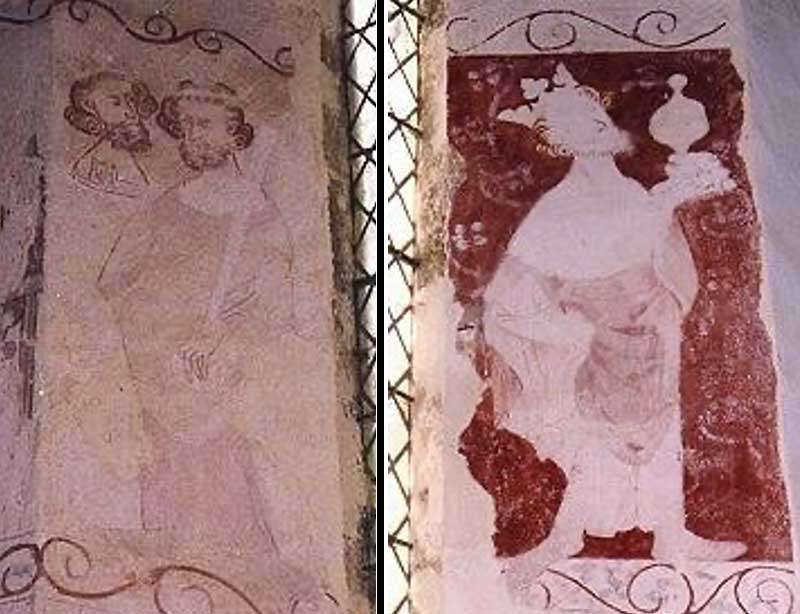
Jacob Cove-Jones may not have told anyone what the purported clues had led him to discover, but he did leave what he claimed was his own coded message to lead others to the location. He claimed to have found “a discovery of immense importance” and left it where it was and created his own code to its whereabouts, as he feared the murals would not survive much longer. Why he didn’t tell anyone what he had discovered is a mystery, but according to his descendants, Cove-Jones had been involved in a dispute with local historians about his find and acted to spite them.
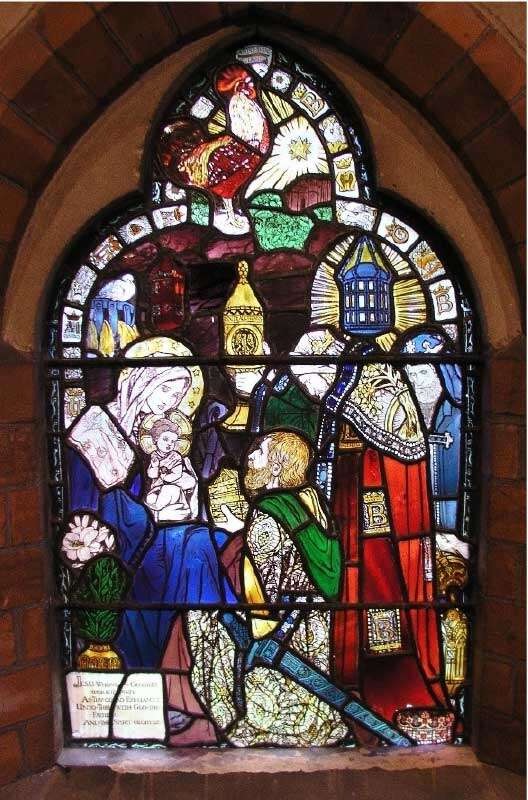
His code has been left in a stained-glass window that Cove-Jones commissioned with artist friend Bernard Lamplugh, which he donated and had installed in the tiny parish church of Langley. Over the years, many have tried to solve the conundrum but failed. The window (left), called the Epiphany Window, was installed in 1907 and is still present. The Epiphany is the twelfth night of Christmas, January 6, when the Three Wise Men are said to have visited the baby Jesus. The stained-glass scene shows the Wise Men with their gifts before the Christ Child in the Bethlehem stable where the Bible says Jesus was born. A Coventry-born historian, Graham Phillips, heard of this mystery and decided to pursue it. He claims to have deciphered a number of the clues in the window, which led him to find a number of objects, including gemstones he believes are from the Breastplate of Judgement; this is the breastplate worn by the High Priest when handling or approaching the Ark of the Covenant, and an ancient stone tablet (below).
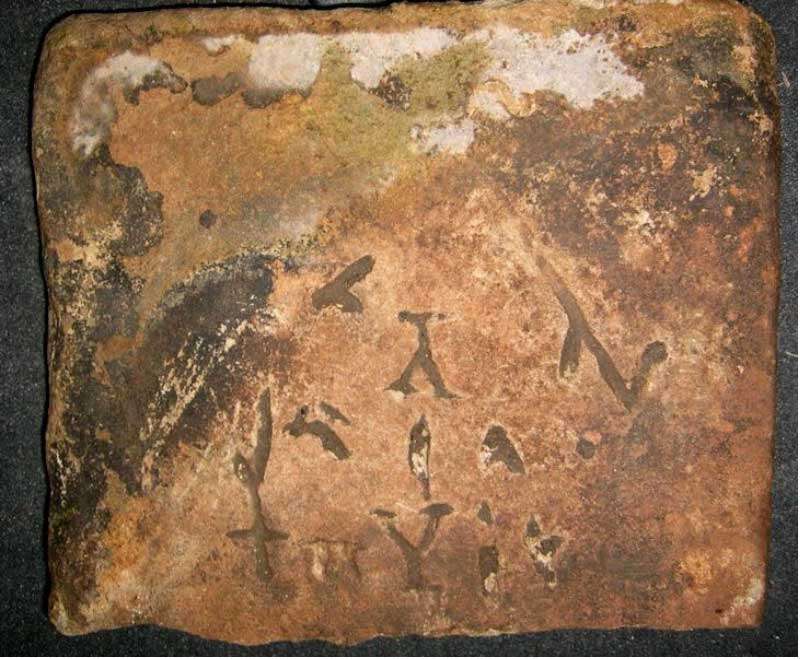
The sandstone from which the tablet was cut has been identified as arenite sandstone, precisely the same type of rock from which Jebel Madhbah is formed, where the Book of Exodus suggests the stone slabs of the Ten Commandments were made (Exodus 34:4). Could this stone slab have been one of, or part of one of the two tablets the Bible says were inscribed by God, given to Moses and kept in the Ark of the Covenant?
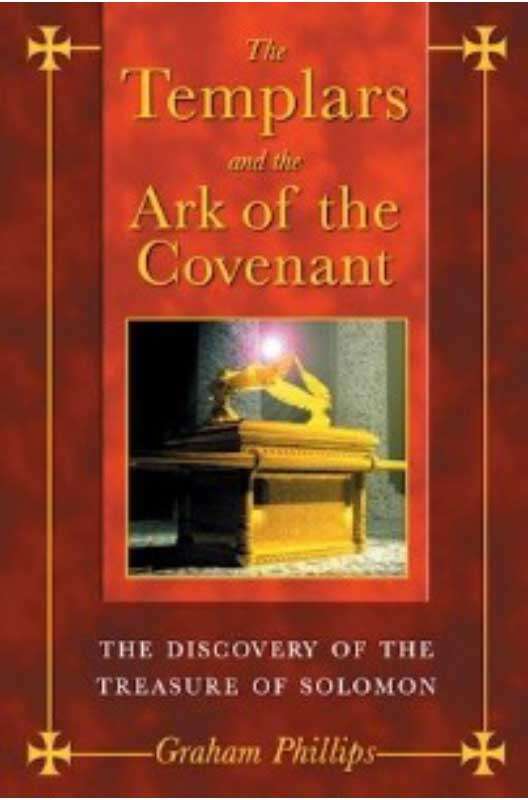
To read more about this fascinating story and how Graham solved the clues in the window of Langley church I recommend reading his 2004 book (left) titled ‘The Templars and the Ark of the Covenant’.